
Stress does not wait for a convenient moment. It arrives mid-meeting, on the commute home, at 2 AM when sleep refuses to come.
Pranayama — the ancient science of breath — offers something modern stress management rarely does: a tool you already carry with you, available at any moment, requiring nothing but intention and 5 minutes.
But in today’s world, we are so busy that we have almost no time each day for exercise, and we shouldn’t miss it because a healthy body and mind can help a person grow in almost every aspect of life. Still, the fast-paced life has pushed us away from self-care.
We are almost like machines, following a routine without much awareness; we are trapped in a continuous loop of work, sleep, and repeat. In between these, we eat and sometimes do things for fun and entertainment.
This lifestyle reduces quality of life. We are not full of Prana or energy, which gives us a sense of understanding of everything around us, whether it is luxury, pleasure, etc. If a person is not healthy, he can not experience any pleasure, no matter how much money or status he has.
Hence it is very important to keep the Prana alive within ourselves, and to keep it alive we need to follow a routine which needs a dedicated time but where do we have time because we are so much occupied with our ambition that we have almost forgot how to take care of our body and mind and as a result the negative forces like stress can easily conquer our body and mind. It reduces productivity and slows down our progress.
But no worries, we have brought you something very easy to do, and it does not need any preparation or separate time. To do this, you need intention and discipline; that’s all. It’s easy to do. You do not need to go to any teacher or coach, but rather to yourself, a calm place, and 5 minutes from your busy schedule, not more than 2 times a day, because we have designed a set of 6 pranayams that can be done in the morning or evening.
Why Pranayama?
As the name suggests, Pranayama means control of breath; it is a technique that helps us master our breath. Breathing is the simplest yet most complex process of our life; we do it every moment, yet we know very little about it. Prana is the breath, the vital energy of our body; hence, Pranayama helps us access our vital Prana more fully.
With better access to our vital energy, we can experience a life that is not ordinary. This is a life where we are at our best physically and mentally, and when our mental health is strong, we are less likely to be brought down by stress or anxiety.
How does Pranayama help to reduce stress?
In Pranayama, we mostly focus on slow, intentional breathing. Slow, intentional Pranayama influences the autonomic nervous system by increasing vagal activity and lowering sympathetic activity in both healthy individuals and those with different health conditions.
The vagus nerve, the parasympathetic branch of the autonomic nervous system, plays an important role in maintaining overall health. It facilitates communication between the brain and internal organs and controls the body’s rest response. Slow Pranayama helps reset the autonomic nervous system by activating stretching-induced inhibitory signals and synchronizing neural activity across the heart, lungs, limbic system, and cortex.
Recent studies have shown that practicing Pranayama has beneficial effects on clinical stress and anxiety levels. In a study, a 4-week pranayama regimen has shown impressive results in reducing anxiety and negative emotions by modulating the activity of brain regions. Pranayama has also shown other benefits, such as improved mental energy and better mental health.
Yoga and pranayama enhance awareness of mind, body, and spirit by helping regulate the limbic-hypothalamic axis. This helps in relieving anxiety and lowering stress hormone levels in the body. It also increases the production of hormones like adrenaline and endorphins, which positively impact the body and strengthen the immune system.
Why does Pranayama work?
It works because for this you do not need much preparation and can be done with very less time spend, it is quite effortless to practice need to follow few steps and it is done, it is simple but powerful, it is basic but magical, it is normal but gives you exceptional results, these simple practices can be performed from anywhere: just need a disturbance free space in some cases those who are not beginner can do it even in the places which are quite noisy because they have learned the art of dislocating himself from the surrounding and shifting his focus to the breath.
It is especially helpful for busy professionals who have no time to spend 1 hour in the gym or in a yoga session; they can do it in the morning and evening for just 10 minutes, even in bed.
For this, the only preparation needed is to keep your mind and body light and free of any residue; then you can sit on the mat. You can complete your 10 minutes of pranayama by the time your morning tea is ready.
Types of Pranayama and How to Do Them.
In yogic culture, many pranayamas support an individual’s well-being, but in this blog, we focus on working professionals and stress management; hence, these five are highly advisable.
- Anulom-Vilom or Alternate Nostril Breathing: To do this Pranayama sit in a meditation pose adjust your posture for Pranayama with straight spine and straight neck and shoulder, then lift your right hand and close right Nostril with thumb and breath slowly but intentionally through left Nostril, close both the nostrils hold your breath then exhale through right Nostril, by keeping the left Nostril close breath through the right Nostril and hold, and finally release the air through left Nostril this completes 1 cycle. Repeat this cycle 10 times, and you will be refreshed and full of energy. Apart from that, regular practice of Anulom Vilom has improved both cardiac and cognitive functioning and, hence, overall well-being.
- Chandra Nadi Pranayama, or left Nostril Breathing: Sit in a meditative posture, keep your right Nostril closed with your right hand, and breathe in through your left Nostril; then hold for as long as possible, and finally exhale through your right Nostril, keeping your left Nostril closed. Make sure the hold is longer than the inhale, and the exhale is longer than the hold; this completes 1 round. Repeat this for at least 10 rounds. This pranayama offers many benefits, including regulating blood pressure, improving sleep quality, improving respiratory efficiency, and strengthening the immune system.
- Bhramari pranayama: Breathing through the vibration in the ears: Sit in a meditative pose, close your eyes, and Inhale through both nostrils. Then close your ears with your index fingers. Then exhale slowly through both nostrils, creating a humming sound that vibrates over both eardrums, throat, and nose; the sound should be like that of a Black bee. Regular practice of this Pranayama increases attention, reduces stress, and helps regulate blood pressure.
- Sheetali Pranayama or Cooling breath: Sit in a meditative posture. Keep the lips slightly apart, allowing the tongue to protrude slightly. Breathe through the mouth, and at the end of the breath, retain the breath by placing the tongue at its natural position. Exhale slowly through the nose, keeping the mouth closed. This completes one round of sheetali pranayam. This Pranayama has many benefits. It cools the body, removes excess heat, supports detoxification, reduces stress and anxiety, improves respiratory health, improves digestion, and helps regulate blood pressure.
- Surya bhedan Pranayama: Sit in a meditative pose keeping the backbone and shoulder straight, first close left Nostril with the finger of right hand and inhale through right Nostril then close both nostrils and hold the breath and finally exhale through the left Nostril make sure the duration of hold should be more than that of inhale and so the duration of exhale should be more than that of hold, this completes one round. Surya Bhedan Pranayama has many benefits, including a better metabolic rate, balanced body energy channels, and increased energy and vitality.
You can read more about pranayama research at the National Center for Complementary and Integrative Health.
This blog gives you an overview of Pranayama, but many types serve other purposes; Pranayama is basic and easy to do, doesn’t take much time, and can be done even with a very busy schedule. This will help working professionals by adding positivity and value to their lives.
Once you start doing these 5 minutes of Pranayama, it will fill you with so much positivity that you will start doing asanas. Your productivity will improve exponentially, and then you will have enough time for yourself.
Final Thoughts
Pranayama does not ask you to change your schedule. It asks for 5 minutes — before your morning chai, during your lunch break, or the moment you feel your shoulders tighten at your desk.
The breath has always been there. You just forgot to use it consciously. Start with Anulom-Vilom tomorrow morning. Just
10 rounds. That is enough to begin.
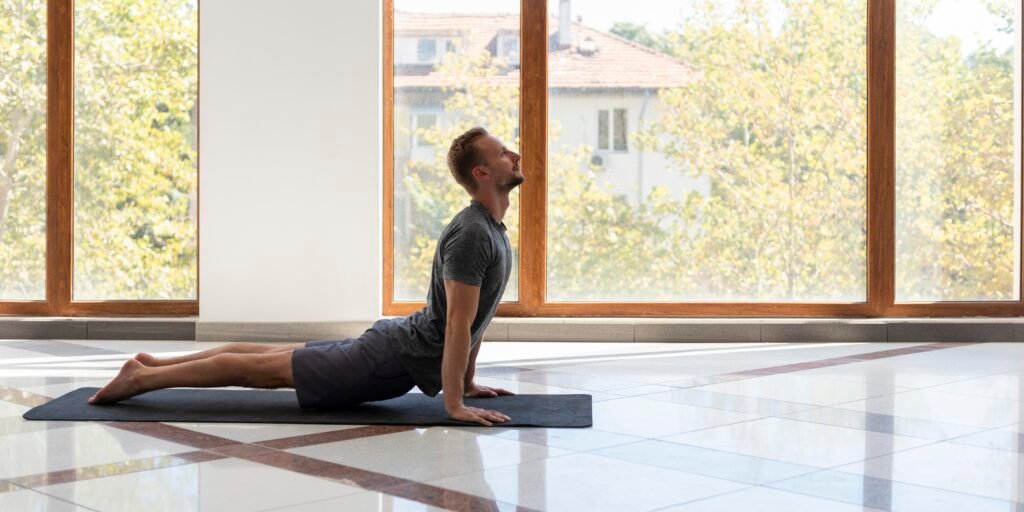
You can also read about Surya Namaskar and start practicing it as your next step.
Pingback: Overthinking-Anxiety : 7 Step-by-Step Anxiety Algorithm